As we continued our journey along the West Coast, we had to make a stop at Nelson Lakes National Park. This National Park was created by the moving of massive glaciers during the most recent ice age. As they receded, they left many glacial lakes in their wake. There are 16 lakes that make up the national park, but we focused on the main two during our short stay.
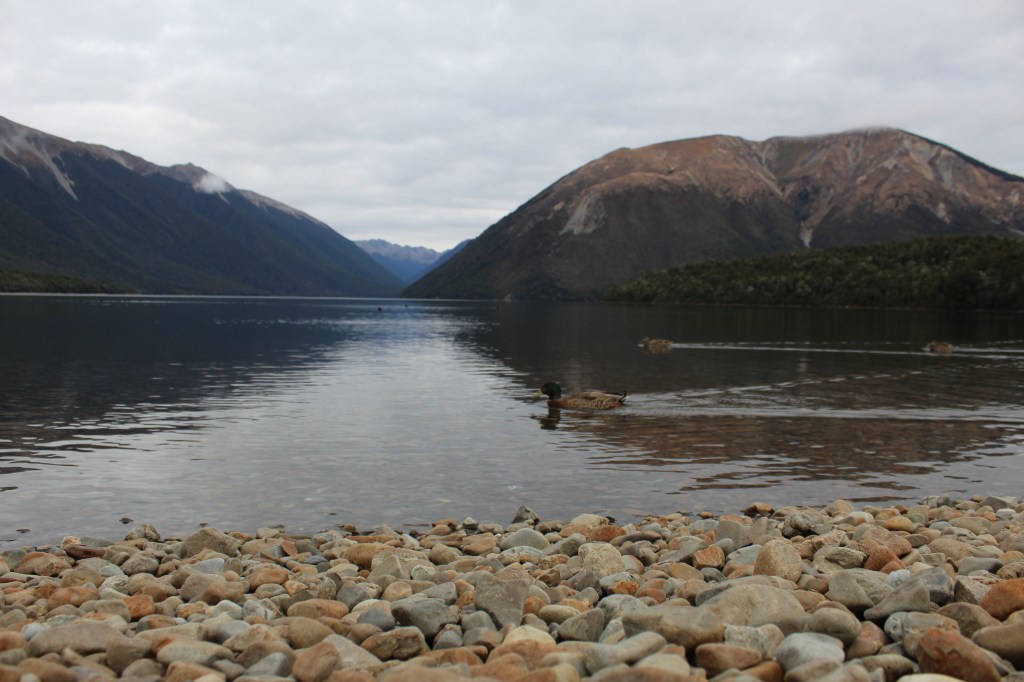
The first lake we stopped at was Lake Rotoiti, which reminded Eric a lot of views he had seen in Glacier National Park, in Montana. Having never been there myself, this view was a first for me, and was absolutely stunning. The water was icy cold, but there were tons of ducks swimming on the lake, enjoying the day. At its deepest, the lake is around 270 feet deep. There were several tourists there enjoying the view alongside us, but it was surprisingly empty, especially compared to some of our experiences with National Parks in the United States.

The next lake we stopped at was Lake Rotoroa, which is around 475 feet deep. It is the larger of the main two lakes in the National Park. Similar to Lake Rotoiti, there were very few people at this lake, and it was nice to walk around without crowds. Once we had finished exploring this lake, we headed back to Rotoiti, which was where our campsite for the night was.
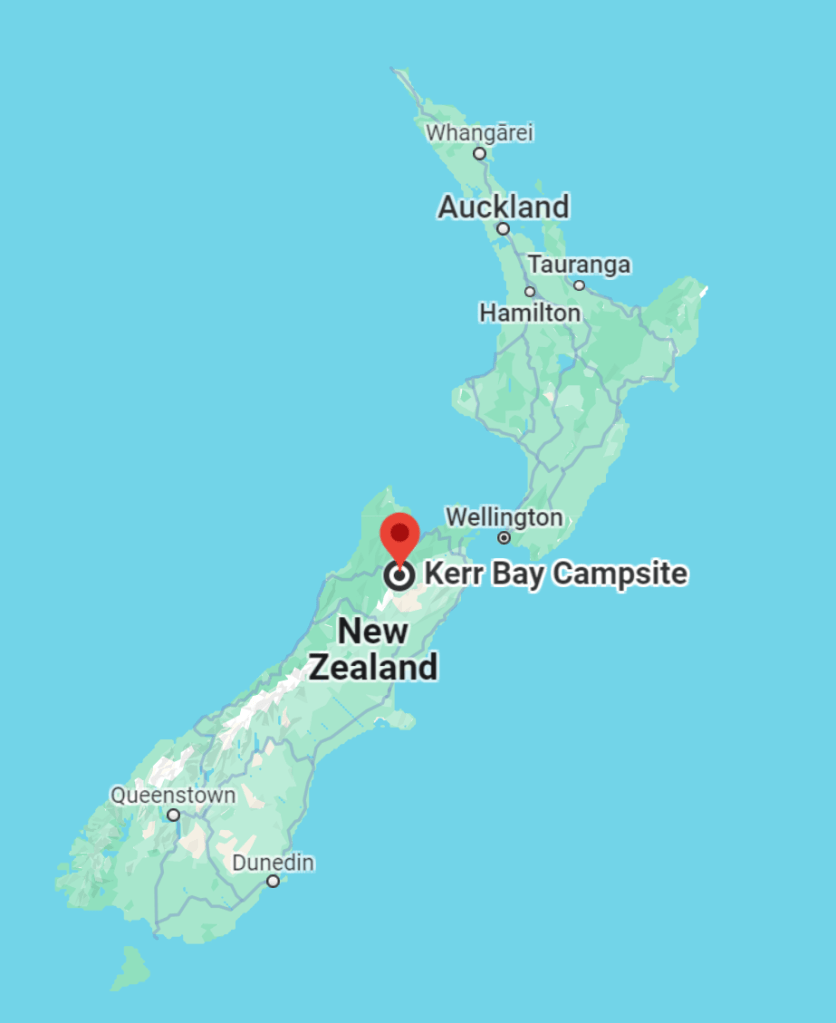
We had purchased the Department of Conservation’s (DOC) 365 day campsite pass when we first got to New Zealand. With this pass, we have access to almost all of the DOC campsites for free. This included the Kerr Bay campsite, which was one of the nicer of the campsites we stayed at. They had coin operated hot showers ($1 for 5 mins) and flush toilets. They also had a dump station and fresh water, so we were able to take care of everything we needed to do before heading out.

Overall, I would like to spend more time in Nelson Lakes National Park. It was cold and gloomy while we were there, and even though we wanted to, the weather really discouraged us from taking a dip in the icy glacial lakes. This is something both of us would like to do once the weather is a little more favorable.
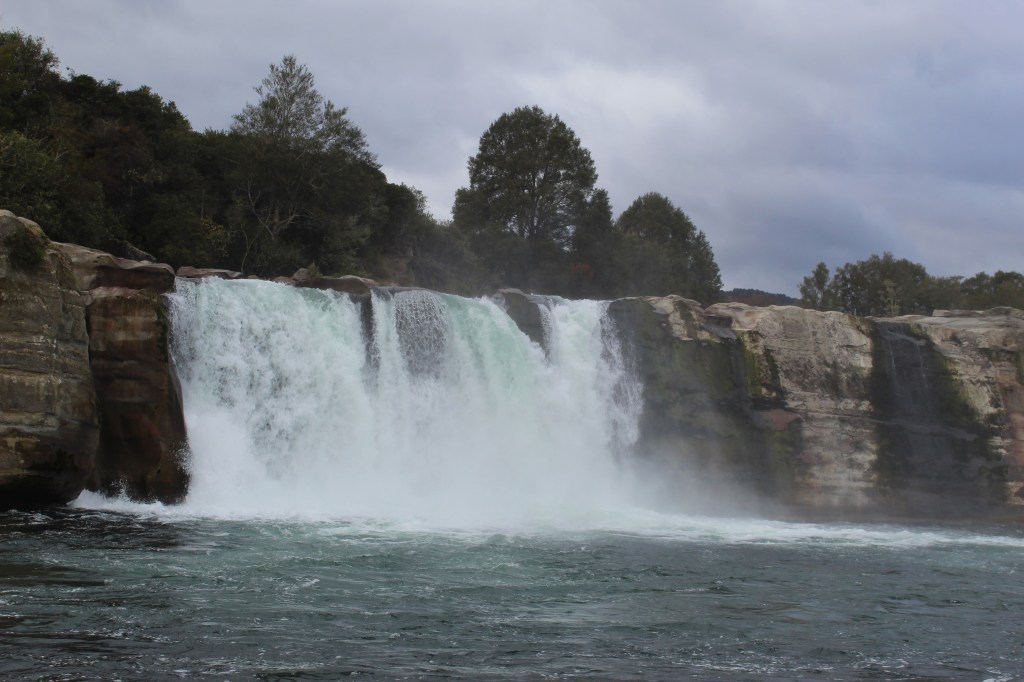
On our way out of Nelson lakes, as we inched back towards the western coast of the South Island to continue our journey, we pulled off to take a quick look at a waterfall. It was very surprising, and seemed to come out of nowhere. There were lots of signs about dangerous undercurrents and riptides, as well as information for experienced kayakers who wanted to kayak down the falls. This waterfall, known as Marui Falls, was created in 1929 by a large earthquake. It was really impressive, and crazy to see the water below the falls swirling in almost a cinematic whirlpool.

 Peaks and Places | Travel and Adventure Blog
Leave a comment